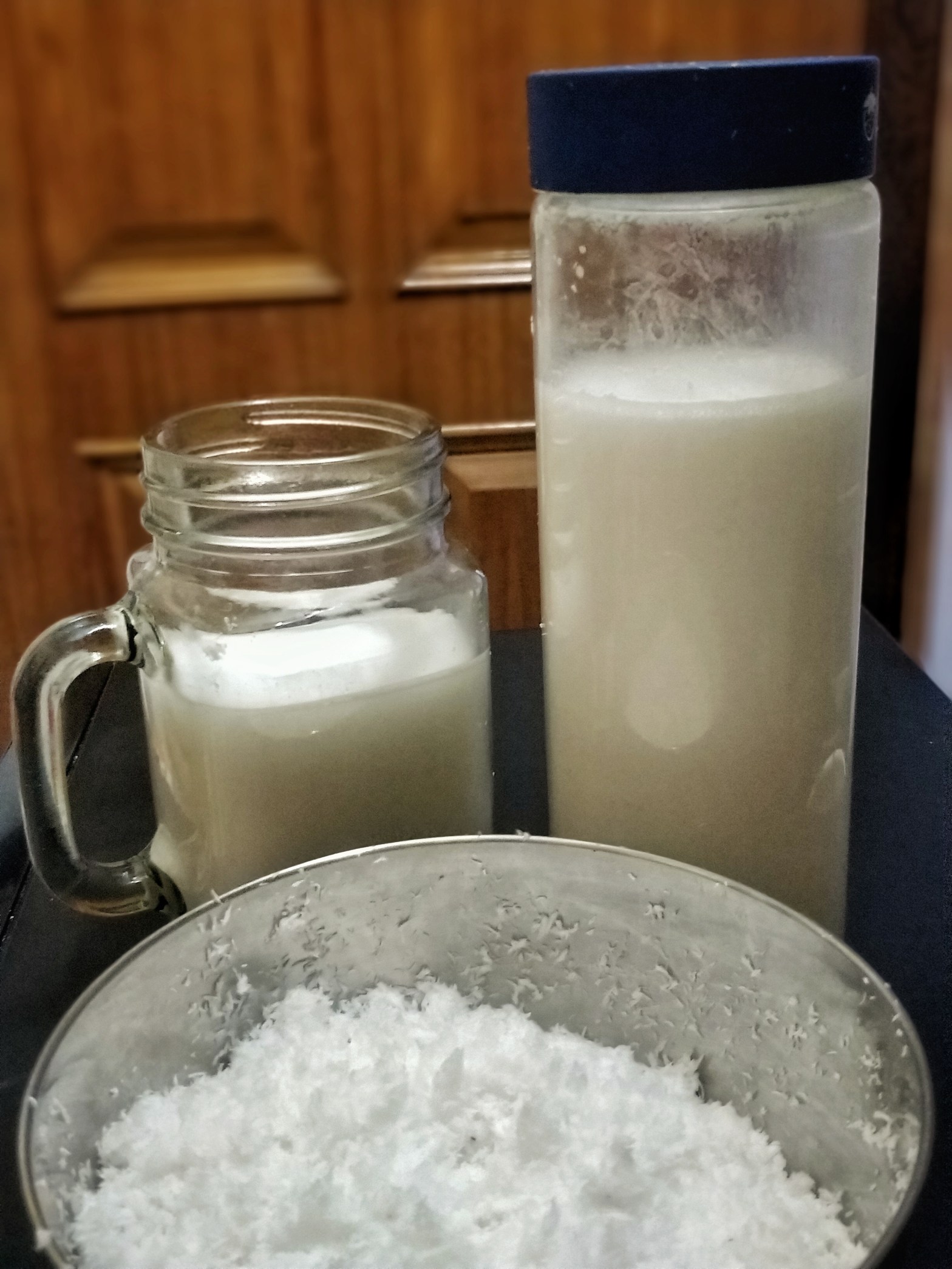
Coconut milk comes from the white flesh of mature brown coconuts, which are the fruit of the coconut tree. The milk has a thick consistency and a rich, creamy texture.
Thai and other Southeast Asian cuisines commonly include this milk. It’s also popular in south Indian cuisines also. ( mainly Kerala).
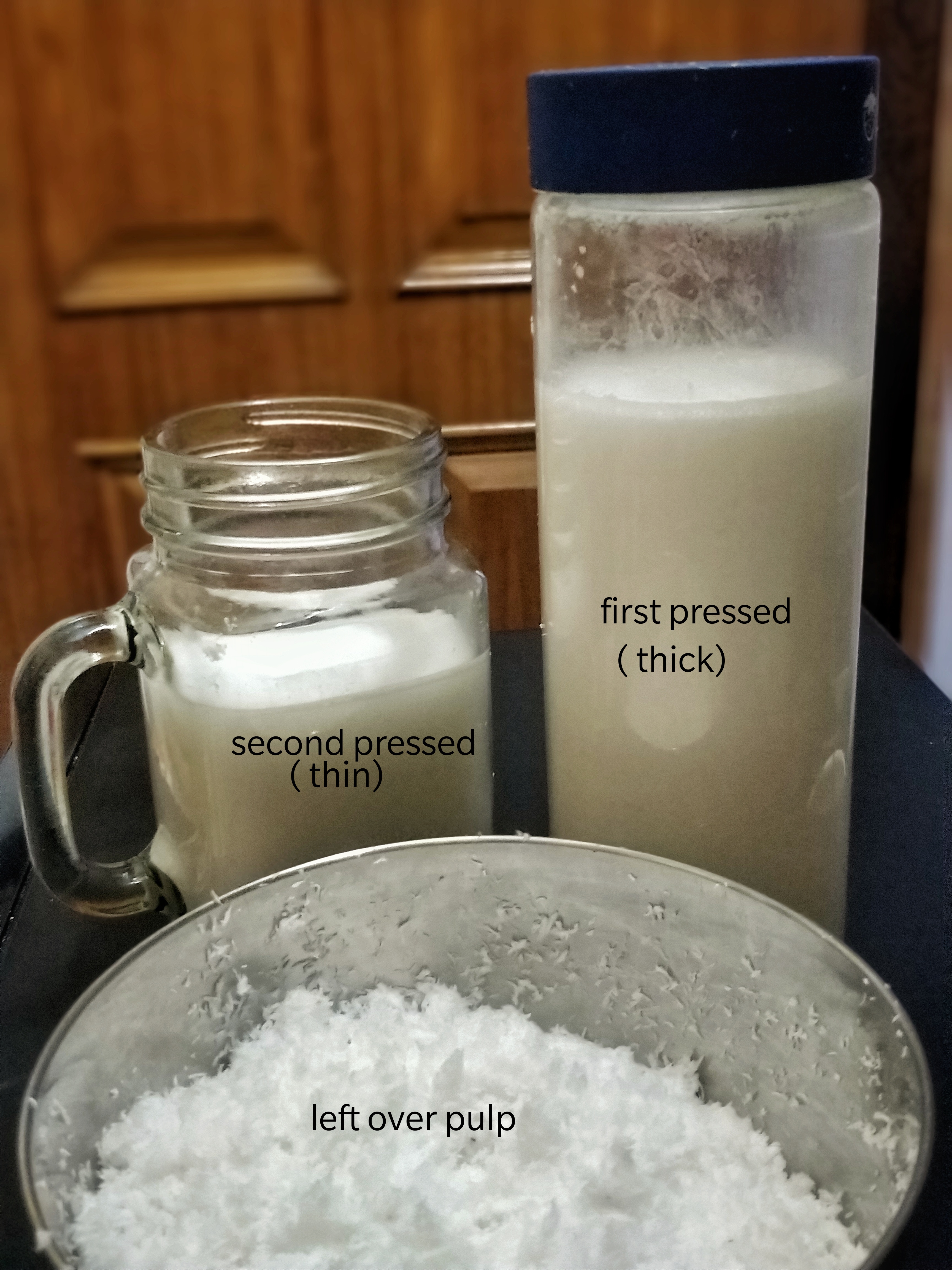
Coconut milk is classified as either thick or thin based on consistency and how much it’s processed.
Thick: Solid coconut flesh is finely chopped and blended well with water. The mixture is then strained through cheesecloth to produce thick coconut milk.
Thin: After making thick coconut milk, the grated coconut remaining in the cheesecloth is again blended with little water. The straining process is then repeated to produce thin milk.
If you start making your own coconut milk at home, you will inevitably end up with a lot of left-over pulp. The coconut milk pulp is still very nutritious, high in fiber, low-fat (most of that good fat went into your milk), and storable.
How to use left over pulp?
1) Use it fresh right after pressing, in your smoothies or sprinkle on your salads.
2) Deep freeze your fresh pulp. The best way to store it is by pressing it thinly into a ziplock bag so you can break off convenient chunks without defrosting the whole packet.
3)Dry your pulp, and keep it in an airtight container. I’ve had the best results with a glass jar, can be used later in cookies or making sweets.
If you experiment, I would recommend not adding too much at a time because you don’t want to accidentally make your food too dense or too dry. And please always feel free to share your ideas and inspirations!
Happy cooking, everyone!
 MY HEAD OVER MEALS
2 thoughts on “Coconut Milk”